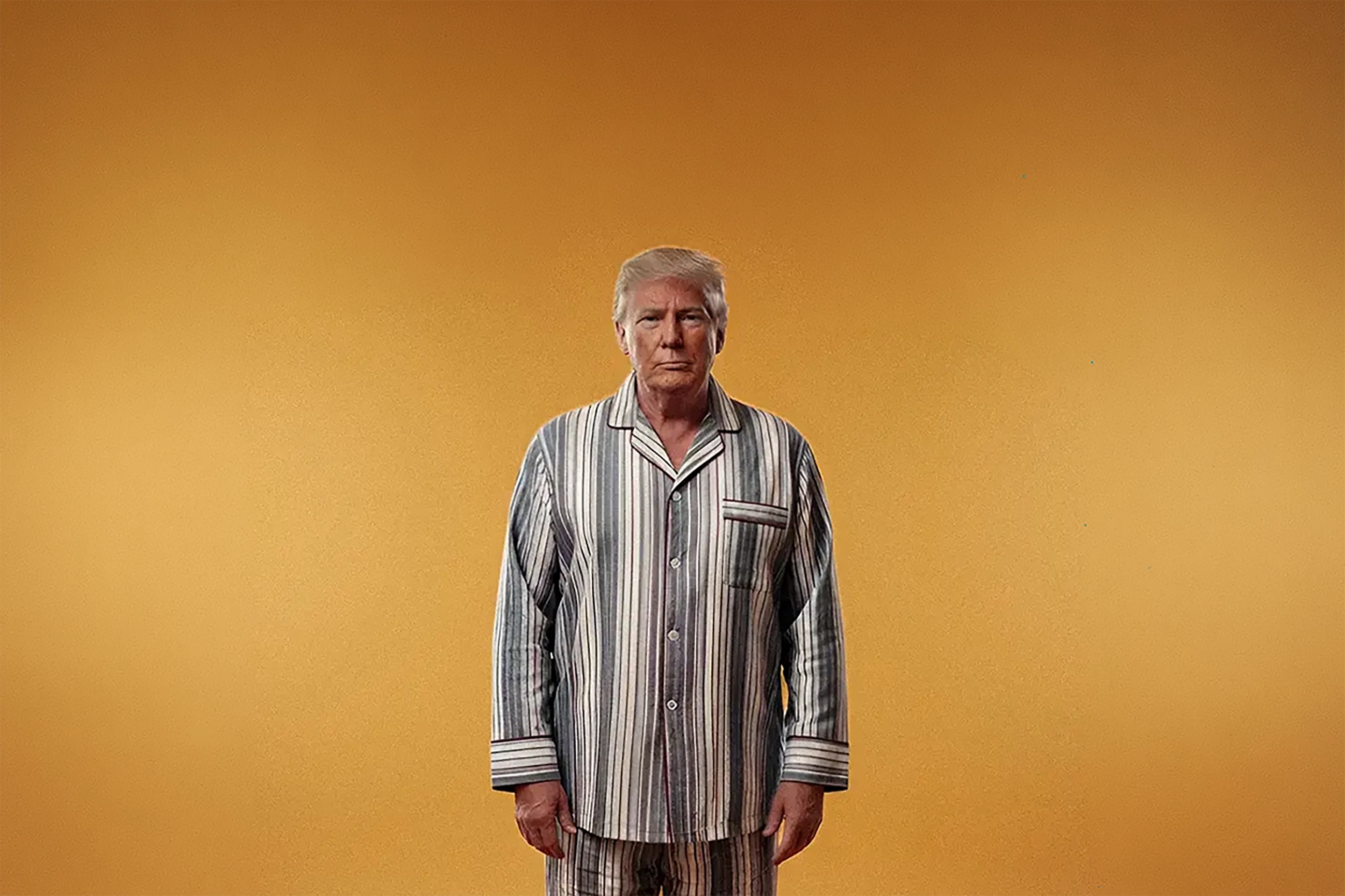



Originally manufactured in El-Mahalla El-Kubra — the heart of Egypt’s historic textile industry — the Kastoor pajama was a product of local craft and industrial pride. It was inexpensive, accessible, and woven into the rhythm of everyday Egyptian life.
Its striped cotton fabric was chosen for climate and comfort, suited to warm evenings and domestic routine. It lived in bedrooms, on balconies, and behind closed doors — a garment associated with rest rather than rank. Ordinary, familiar, and politically neutral, it carried no symbolism beyond utility — until Egyptians reassigned it a role it used to play.
The Historical Weight of Stripes
For Jews, the image of a striped garment carries a deeply embedded historical memory. Vertical blue-and-gray lines are not merely a pattern — they are visually associated with one of the darkest chapters of Jewish history.
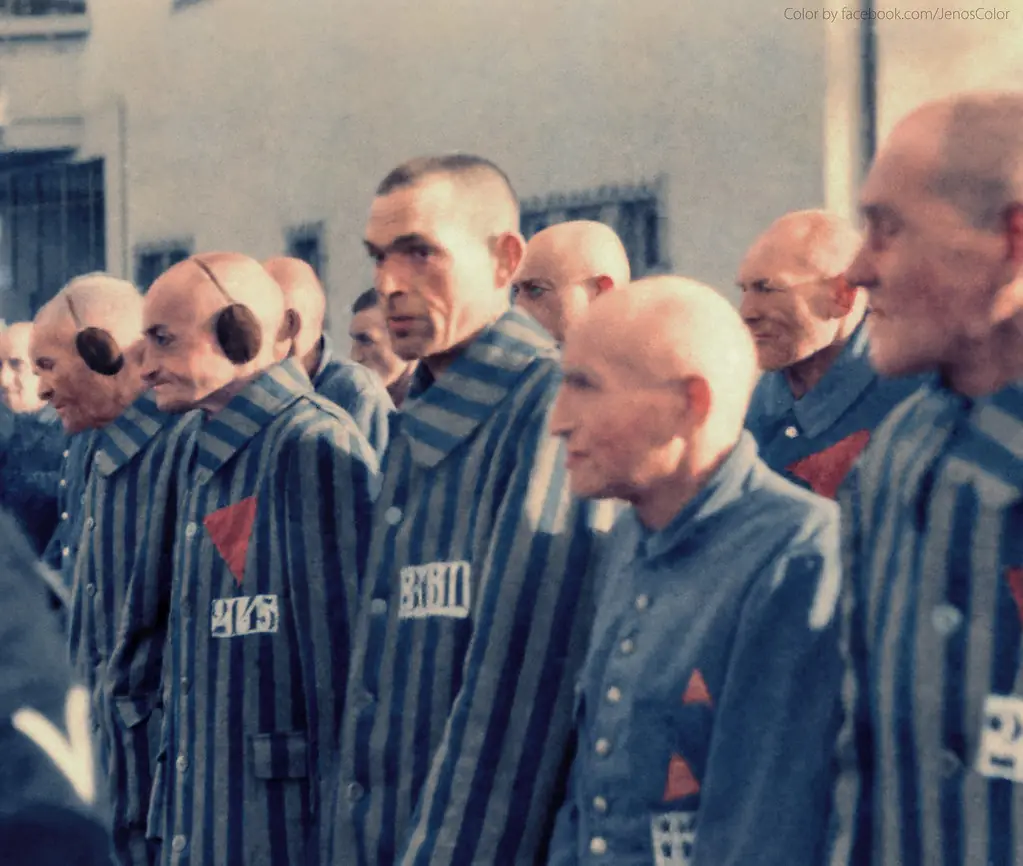
The striped garment most commonly associated with Nazi concentration camps emerged in the 1930s as part of a standardized prison uniform system implemented by the SS regime in Germany.
These blue-and-gray vertically striped uniforms were designed not for comfort, but for identification and control.
Prisoners were assigned numbers, and colored triangular badges were sewn onto the fabric to classify them by category—political prisoners, Jews, Roma, homosexuals, and others targeted by the regime.
The uniform functioned as a visual tool of dehumanization: it erased personal identity, replaced names with numbers, and made individuals immediately recognizable within the camp hierarchy.
Stripes were practical for surveillance, making escape more difficult, but they also became one of the most enduring visual symbols of systemic oppression and industrialized persecution during the Holocaust.
The Ideation: Psychological Warfare and “Made in Egypt”
During the post-war prisoner exchanges following the October War of 1973, Israeli captives appeared wearing striped Kastoor pajamas instead of military uniforms. The idea is widely attributed to President Anwar El-Sadat as a deliberate act of psychological warfare.
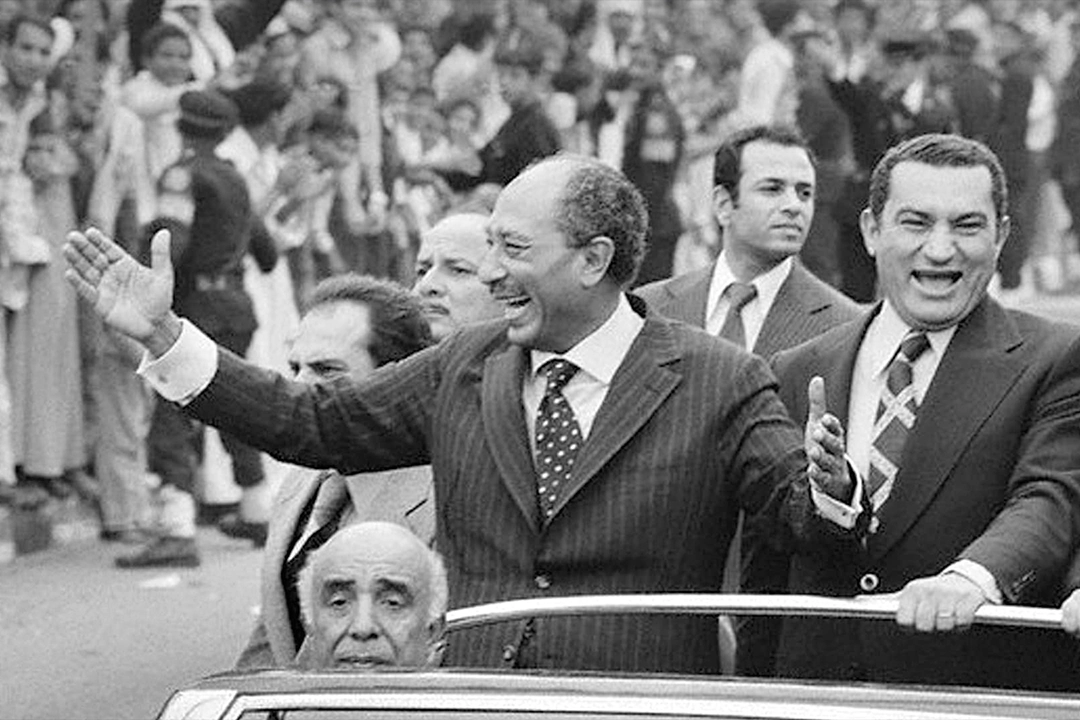
The striped pajamas, manufactured in El-Mahalla El-Kubra, resembled the uniforms associated with Nazi concentration camps — a visual reference carrying painful historical significance for Jews. The intention, as widely described in popular narratives, was to create psychological shock, undermine morale, and reinforce a sense of vulnerability following the war.
Beyond the psychological dimension, the gesture also carried a national message. Sadat reportedly wanted the world to see Israeli prisoners dressed in authentic Egyptian-made garments — a symbolic declaration of industrial pride and a reminder that victory had been achieved by Egyptian hands. “Made in Egypt” became more than a label; it became part of the visual statement.
The Impact: Perception and Public Memory
When the Israeli captives disembarked in Tel Aviv wearing striped Kastoor pajamas, the scene triggered a profound media and emotional reaction inside Israel. The imagery was widely described as humiliating and psychologically devastating. Popular narratives recount that Prime Minister Golda Meir was brought to tears upon witnessing the moment — a detail that has since become part of the symbolic memory surrounding the event.
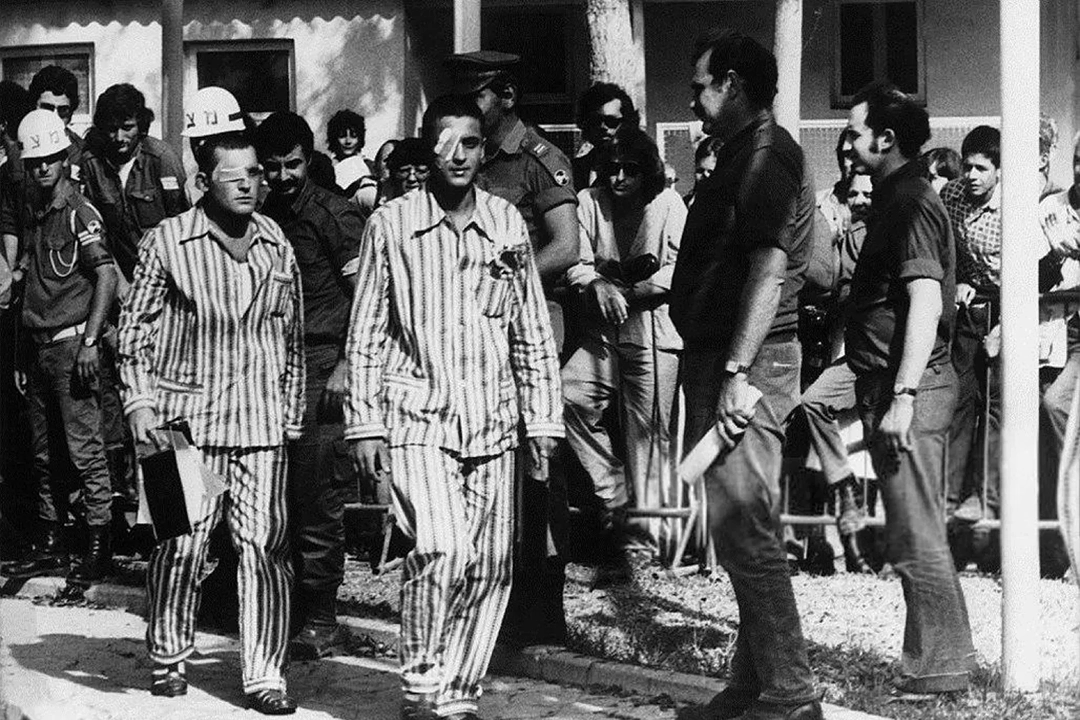
What began as ordinary household sleepwear transformed into a symbol interpreted in radically different ways on either side of the conflict. In Egypt, the Kastoor pajama became embedded in collective memory as a gesture of psychological strength, industrial pride, and national victory associated with October 1973.
In Israel, however, the same image was perceived through a lens of humiliation and historical sensitivity — a moment that unsettled public consciousness and carried echoes far heavier than the fabric itself.
The Image as Strategy
The force of the moment did not depend on spectacle. There was no staged humiliation, no explicit declaration. The strategy lived entirely in the image. A uniform — the visual code of rank, command, and national authority — was absent. In its place stood a domestic garment, striped and unmistakably ordinary.
The shift was deliberate and psychological. Authority, once reinforced by insignia and structure, appeared visually displaced. Power did not vanish — it was reassigned. The battlefield had ended, but the image continued the confrontation, transferring dominance from military hierarchy to symbolic control.
Reassigning Power in the Present
Kastoor 73 does not recreate the historical moment — it reactivates its visual logic. If authority can be destabilized through clothing once, what happens when that same garment is placed on contemporary figures who embody political and institutional power today?

Through AI-generated imagery, the project positions current public figures within the striped Kastoor pajama — not as parody, but as inquiry. The substitution is simple: tailored suits and ceremonial uniforms are replaced with domestic fabric. The result is immediate. Hierarchy appears unsettled. Power feels reframed.
The garment itself remains unchanged — striped cotton, unembellished, familiar. What shifts is context. By relocating the fabric into the present, Kastoor 73 examines how quickly authority can be visually reassigned when its symbols are altered.
In conflicts, history often remembers weapons, strategies, and victories. Kastoor 73 remembers something smaller — a piece of clothing — and asks how such an ordinary object can hold such extraordinary significance.
Power does not always arrive loudly.
Sometimes it is folded.
Sometimes it is worn.
And when the moment comes,
Egypt has the pajamas ready.