


When school boards, principals, and marketing directors consider investing in a high-quality 360° virtual tour, the primary question brought to the table is always the same: What is the actual Return on Investment (ROI)? It is a highly valid question. Producing an immersive, custom-built virtual experience requires budget allocation, time, and logistical coordination across multiple campus departments.
However, framing a virtual tour simply as an "expense" or a "nice-to-have marketing asset" is a fundamental misunderstanding of how today's parents choose schools. A virtual tour is a frictionless bridge between a parent's initial curiosity and their final enrollment decision. It serves as a 24/7 admissions officer, a transparency builder, and a powerful pre-qualification tool that works tirelessly in the background.
To truly understand the ROI of virtual tours for private and international schools, we must break down the impact across four distinct categories: The Psychology of the Digital Journey, Quantitative Returns (measurable metrics), Qualitative Returns (brand perception and trust), and Operational Returns (efficiency for the admissions team).
1. The Psychology of the Parent’s Digital Journey
Before diving into numbers, we must understand the user. Parents are making one of the most important decisions for their children, a decision that carries immense emotional weight and significant financial commitment. In today's market, parents rarely experience a school for the first time in person; they experience it through images.
The Functional vs. Emotional Filter
Families evaluate schools through two distinct filters: functional and emotional. Social media is excellent for building awareness and handling the emotional spark by showing daily life. However, the school website serves a much more critical role: functional validation.
The digital browsing phase is where parents perform their first major filter. Your website must provide absolute clarity on curriculum details, accreditation, tuition transparency, and facilities. If a parent cannot "see" the school through the screen, they are significantly less likely to book a physical visit.
Eradicating Uncertainty
Uncertainty is the greatest enemy of enrollment. When evaluating schools, parents subconsciously ask a series of rapid-fire questions: Does this environment look safe? Do the teachers appear competent? Are the students engaged and comfortable? Does this school reflect stability?
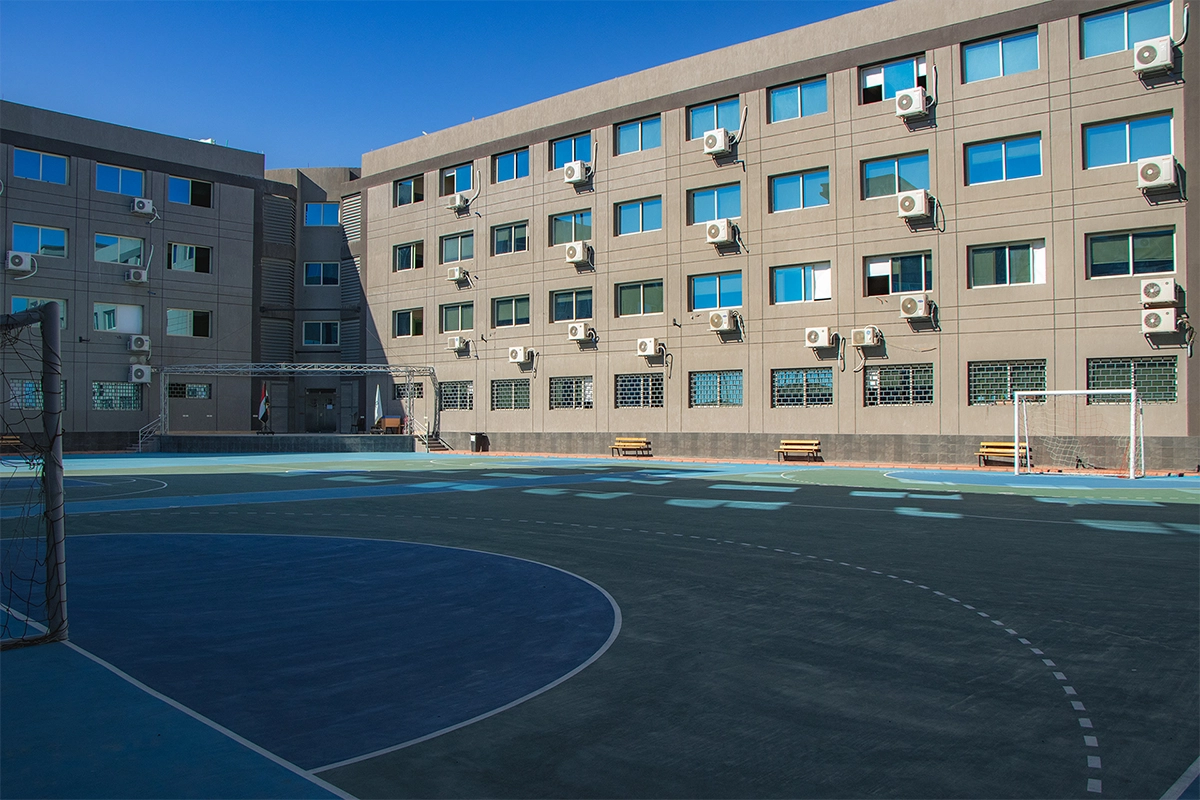
Images answer these questions faster than words. A virtual tour takes this psychological reassurance to the next level. By allowing parents to step inside the corridors, look around the science labs, and stand on the football pitch digitally, the tour actively dismantles the fear of the unknown.
2. The Quantitative ROI: Measurable Impact on the Admissions Funnel
The most immediate way to measure the ROI of a virtual tour is by analyzing your website analytics and tracking changes in your funnel conversion rates. The goal of a website is not to "sell" a school, but to remove the obstacles that prevent a parent from visiting.
A. Increased Website Dwell Time and SEO Benefits
Search engines like Google heavily factor "dwell time"—the amount of time a user stays on your page before clicking away—into their ranking algorithms. A standard text-and-image website typically holds a visitor's attention for perhaps 1 to 2 minutes. When a high-fidelity interactive virtual tour is embedded seamlessly into the homepage or admissions page, the average dwell time frequently jumps exponentially.
Parents actively engage with the content. They pan around the early years section, zoom in on the indoor swimming pool, and navigate through the performing arts theater. This extended, active engagement signals to search engines that your website provides immense value. Consequently, this pushes your school higher in organic search results for highly competitive keywords, reducing your reliance on expensive pay-per-click (PPC) advertising over time.
B. Higher Conversion Rates on Inquiry Forms
A website that relies on stock photos or low-quality mobile shots creates a "trust gap". Parents may wonder if a lack of investment in digital presentation equates to a lack of investment in the actual classrooms. A virtual tour bridges this gap flawlessly.
To move a parent from "interested" to "applied," the user experience must be seamless, adhering to the 3-Click Rule: parents must be able to find the admissions form or the "Book a Tour" button within three clicks. Schools that integrate their virtual tours directly alongside these inquiry forms see a measurable uptick in lead generation. The psychology at play is simple and effective: "I like what I see, I have verified the quality of the infrastructure, and now I want to know more."
C. Expanding the Geographic Funnel (Expats and Relocators)
For international schools, expatriate families and out-of-town relocators represent a highly lucrative demographic. These parents are often forced to make high-stakes educational decisions from thousands of miles away, completely unable to attend a physical open day or a standard campus tour.
A virtual tour acts as the ultimate equalizer in the admissions market. It allows a family sitting in Dubai, London, Riyadh, or even across the country in Alexandria, to confidently explore a campus in New Cairo. Securing even one or two international or out-of-city enrollments per year that would have otherwise been lost pays for the cost of the virtual tour exponentially.
3. The Qualitative ROI: Building Immediate Trust and Transparency
Not all returns can be tracked on a spreadsheet immediately, but qualitative returns dictate long-term brand equity and community perception. Your website must provide high-quality galleries that prove the environment matches the marketing promises.
A. The Psychology of Absolute Transparency
When a school opens its doors digitally via a 360° tour, it sends a powerful, subconscious message to the market: We have absolutely nothing to hide. Parents are naturally skeptical of carefully cropped, highly edited static photos, knowing that what lies just outside the frame might tell a vastly different story.
A 360° tour gives narrative control entirely to the user. They can look up at the ceiling infrastructure, down at the flooring, and deep into the corners of the classroom. This radical transparency builds immense, unspoken trust before the admissions team even says a word or answers a single email. High-quality photography communicates structure, safety, modernity, transparency, and credibility.
B. Showcasing Differentiators Without the Rush
Physical school tours, while necessary, are often constrained by strict time limits, noisy hallways, transitions between classes, and the specific, pre-planned route the guide takes. A parent might completely miss the state-of-the-art robotics lab because it was locked for a private session, or fail to appreciate the sheer size of the sports complex because they were focused on keeping their younger toddler quiet.
A virtual tour allows parents to explore your school's unique selling propositions (USPs) at their own pace. They can re-visit key areas like the library or the designated early years playgrounds whenever they want, absorbing the details that matter most to their specific family values.
C. Emotional Validation for the Entire Family
Choosing a school is rarely a unilateral decision; it is a family decision. Often, one parent conducts the initial physical tour while the other is at work or traveling. The virtual tour allows the visiting parent to go home, open their tablet, and say, "Look at this, let me show you the exact classroom our daughter will be in."
Furthermore, it allows the child to experience the space digitally before their first day. This drastically reduces first-day anxiety and generates genuine excitement about their new environment, turning the student into an advocate for the school within the household.

4. The Synergy of Virtual Tours and Professional Still Photography
It is crucial to understand that a virtual tour does not replace traditional photography; rather, they serve complementary roles within the same digital ecosystem. While a virtual tour provides unmatched spatial understanding and transparency, you still need professional school photography to capture the human element and create emotional resonance.
A. Capturing the Human Element
Strategic media production builds perception, whereas casual documentation only captures moments. A clean, structured, well-lit classroom signals order, and a confident teacher leading a discussion signals competence. While a virtual tour is usually shot empty to showcase the pristine nature of the facilities, professional still photography populates those spaces with life.
You need crisp, high-resolution images of students laughing in the cafeteria, deeply focused in the science lab, and interacting warmly with faculty. Teachers who appear confident, engaged, structured, and approachable strengthen parent perception even before direct interaction. If you want to understand how this integration of imagery and strategy works in practice, reading our deep dive on the role of school photography in Egypt provides essential context.
B. The Importance of Preparation
Whether you are shooting a 360° virtual tour or conducting a professional photography session, the results are entirely dependent on how well the campus is prepared. Cluttered backgrounds or poor lighting signal inconsistency. To maximize your investment in both virtual and traditional visual assets, rigorous preparation is required. I highly recommend reviewing my comprehensive guide on how to prep a school campus for a professional media shoot to ensure your facilities look their absolute best before the cameras ever arrive.
5. The Operational ROI: Empowering the Admissions Team
The impact of a virtual tour extends far beyond the marketing department; it deeply influences the daily operations and efficiency of your school's administrative and admissions staff.
A. Pre-Qualifying Leads and Saving Time
Physical tours take significant time, energy, and resources from your admissions staff. Having your team give a detailed 45-minute walking tour to a family whose expectations do not align with the school's offering—or whose budget doesn't match the tuition—is an operational loss.
A virtual tour acts as a relentless pre-qualification filter. Parents who have spent time exploring the digital campus and subsequently take the step to book a physical tour are high-intent prospects. They are already 80% sold on the infrastructure and the environment. Therefore, the physical visit shifts from an exhausting "discovery" phase to a much easier "confirmation" phase, allowing the admissions officer to focus on building a relationship rather than just acting as a tour guide.
B. The 24/7 Open House and Real-World Application
Hosting a physical Open Day requires catering, staff overtime, immense logistical planning, and often disrupts the normal campus flow. While physical Open Days remain a cornerstone of school marketing, a virtual tour provides an "always-on" Open House. Your website becomes your 24/7 campus. It answers questions on weekends, during public holidays, and late at night when parents are actually finding the quiet time to do their research. Over 70% of Egyptian parents browse school options via mobile while commuting or during evening hours.
A prime example of this operational efficiency in action can be seen in our recent project. By exploring the New Jazeera Schools (NJS) Virtual Tour, you can see firsthand how a fully interactive digital twin of a campus allows a school to present its facilities with total clarity and confidence, operating as a perpetual admissions tool.
C. Empowering Educational Fairs and B2B Presentations
When your admissions team attends international education fairs, corporate relocation seminars, or embassy events, handing out standard paper brochures is no longer enough to stand out in a crowded hall. Equipping your team with a tablet—or even providing VR headsets at the booth—loaded with your high-definition virtual tour creates a magnetic, interactive experience. It allows them to transport prospective families directly into your campus right from the convention center floor, drastically outperforming neighboring booths that rely solely on standard pull-up banners.

6. The Financial Mathematics: Cost vs. Lifetime Value (LTV)
To calculate the true ROI of a virtual tour, we must shift the perspective from immediate marketing spend to the Lifetime Value (LTV) of a single enrolled student.
Let's consider the mathematics for a hypothetical premium international school. If the average annual tuition is $8,000, and a student typically stays enrolled with the school for an average of 7 years, the base LTV of that one student is $56,000. Furthermore, satisfied families often enroll younger siblings, potentially doubling or tripling that lifetime financial value to the institution.
The cost of producing a premium, custom 360° virtual tour—complete with professional architectural photography techniques, custom UI design, aerial drone panoramas, and informational hotspot integration—is a mere fraction of the LTV of just a single student.
If the virtual tour is the deciding factor for just one family—whether an expat relocating to the country or a local family who was swayed by the digital transparency over a competitor—the tour has completely paid for itself multiple times over. In reality, a well-implemented, highly visible tour influences dozens of enrollment decisions every single academic year, making it one of the most cost-effective and highest-yielding marketing assets a school can commission.
7. Strategic Implementation: Making the Tour Work Harder
A virtual tour is only as effective as its placement and accessibility. Spending the budget to create a stunning tour and then hiding it behind a complex menu structure defeats its entire functional purpose. To maximize your ROI, the digital user experience must be meticulously planned.
- Homepage Prominence: The tour should not be buried on a sub-page. It should be accessible directly from the main banner, hero section, or top navigation bar.
- Contextual Embedding: Do not limit the tour to a single "Virtual Tour" page. Embed the specific 360° view of the science lab directly onto the "Curriculum" page. Embed the sports hall and swimming pool directly onto the "Athletics" page. Bring the interactive spaces to the parent exactly when the context is relevant.
- Integration with Tracking: Does your website integrate with a CRM system to ensure no lead is dropped?. Ensure your virtual tour includes embedded lead-capture forms or direct links to your admissions portal.
- Consistent Visual Identity: The visual quality of the tour must match your other assets. Consistent color grading, lighting style, and framing create a recognizable identity. When visual identity is consistent, the school appears organized and stable.
Future-Proofing the School Brand
The private educational market is evolving at a breakneck pace. What was considered a cutting-edge, luxury marketing tool five years ago is rapidly becoming a baseline expectation today. Millennial and older Gen Z parents are digitally native; they expect frictionless, high-quality digital interactions from the brands and institutions they choose to interact with.
Investing in a comprehensive virtual tour is not just about solving today's immediate admissions challenges; it is about future-proofing the school's long-term brand positioning. It firmly establishes the institution as forward-thinking, transparent, technologically adept, and deeply respectful of a parent's time and decision-making process.
Final Thought
In the digital age, your campus doesn't start at the physical gate—it starts in the palm of a parent's hand. The physical campus is where education happens, but the digital campus is where the decision to enroll begins.
Clear information combined with credible visuals results in confident parents. A virtual tour is the ultimate, undeniable expression of that transparency. It proves your marketing claims, provides a compelling, immersive narrative that static text simply cannot match, and builds the foundation of trust necessary for long-term loyalty.
The ROI is not just measured in clicks, page views, or extended dwell times; it is measured in confident parents, excited students, and a consistently robust, highly-qualified enrollment pipeline.
The goal of a website is not to "sell" a school. It is to remove the obstacles that prevent a parent from visiting.
A high-quality virtual tour dismantles the biggest obstacle of all: the fear of the unknown.